
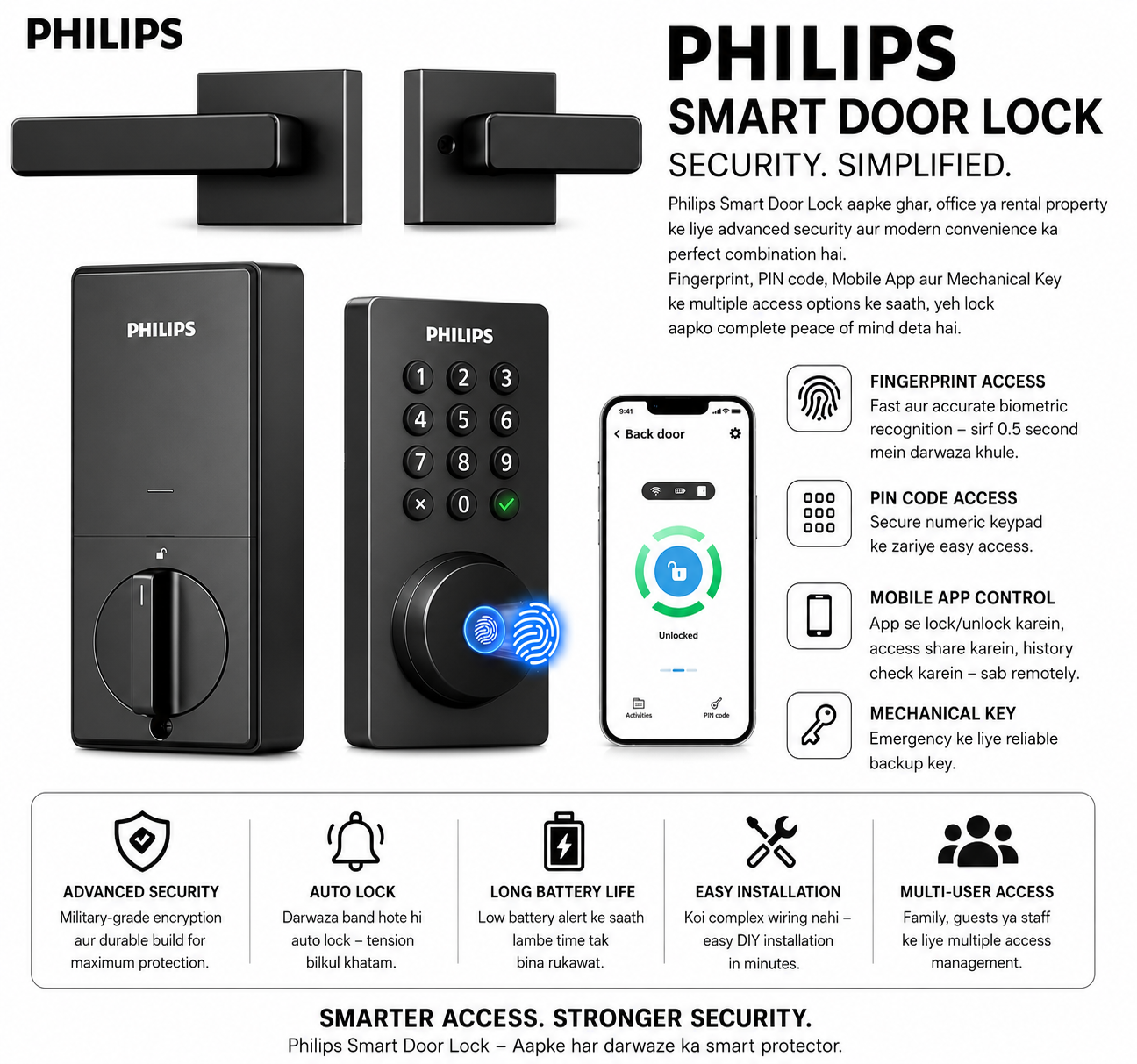
Ultimate Review of the Philips Wi-Fi Keypad Smart Door Lock.
When it comes to upgrading your entryway, the Philips Wi-Fi Keypad Smart Door Lock stands out as a top-tier choice
Imagine never having to fumble for your keys in the dark again. Picture a world where you can let the dog walker in while sitting at your office desk, or check if your front door is securely locked from halfway across the world. With the Philips Wi-Fi Keypad Door Lock with Handle, that futuristic convenience is already a reality.
If you are looking to upgrade your home’s baseline security while adding a sleek, modern touch to your main entrance, this premium smart lock system is engineered to deliver. In this comprehensive review, we dive deep into its elite feature array, real-world data metrics, and a step-by-step DIY installation guide.
Many users prefer the Philips Wi-Fi keypad Smart Door Lock because it balances smart security with everyday convenience.
🛒 Quick Link:
1. What is the Philips Wi-Fi Keypad Door Lock?
The Philips Wi-Fi Keypad Door Lock is an all-in-one residential entry solution designed for modern front doors. Unlike older legacy smart locks that required an external, proprietary “bridge” or “gateway” hub plug-in to access internet controls, this Philips model features an advanced integrated Wi-Fi module. It bridges a heavy-duty deadbolt latch, an ergonomic lever handle, and multi-layered digital access logic into one matching design.
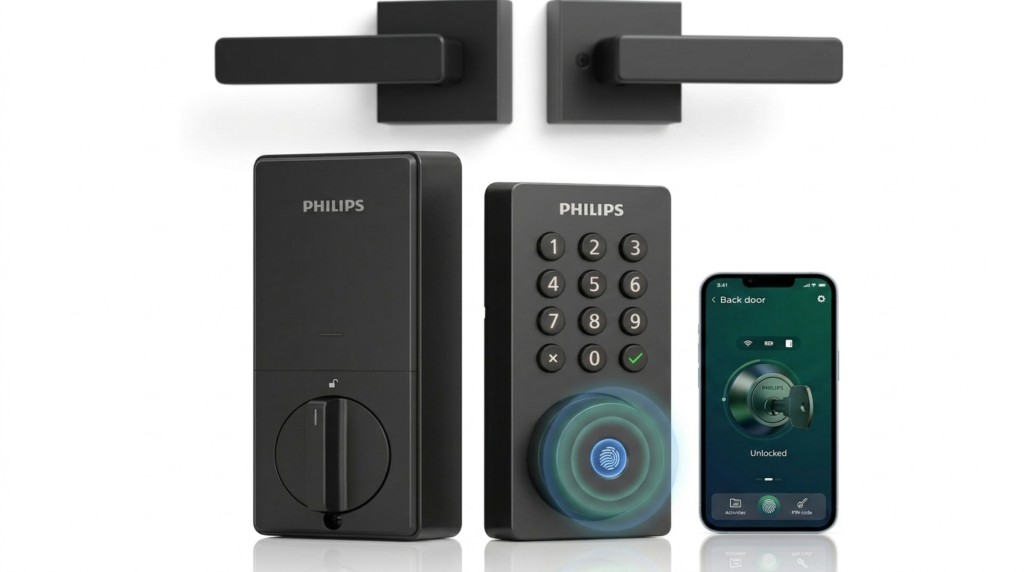
2. Key Specifications & Performance Analysis
To give you an honest overview before purchasing, we mapped out the vital tech configurations alongside verified product pros and cons below:
📊 Technical Specifications:
- Access Interfaces: 5-in-1 Entry Protocol: Biometric Fingerprint, Anti-Peep Keypad PIN, Mobile App Remote, Connected Voice Assistant, and Mechanical Overlay Override.
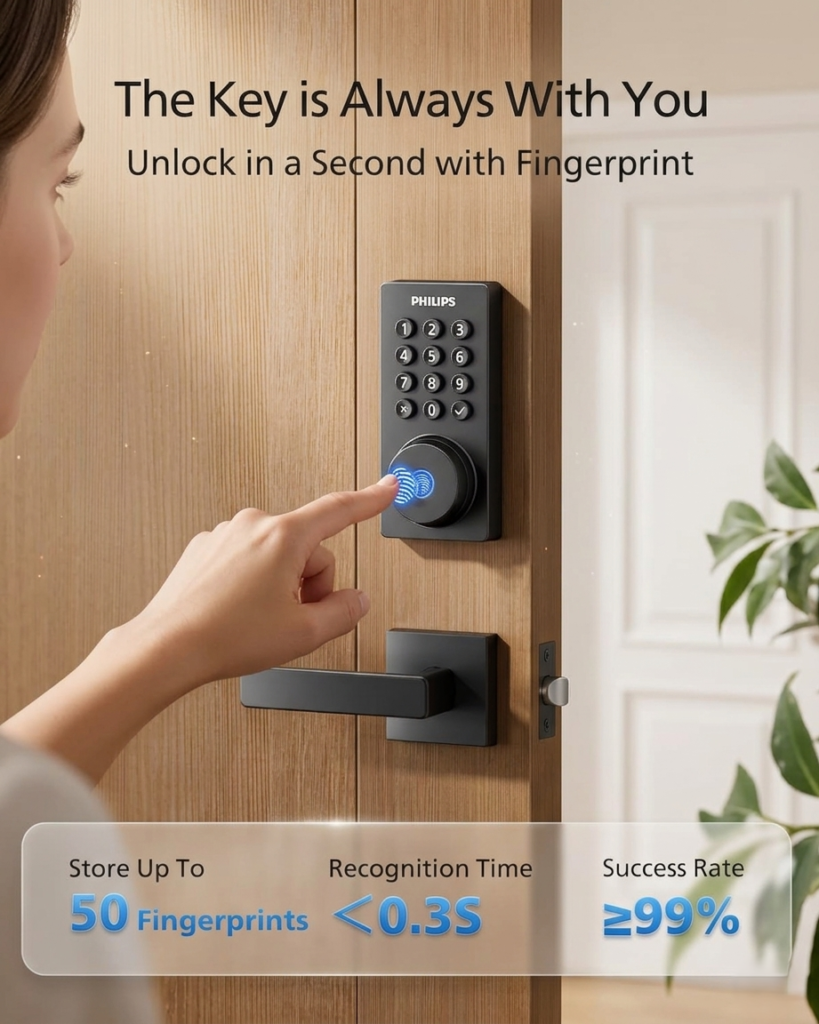
- Biometrics Matrix: Ultra-fast validation time matching < 0.3 Seconds with a verified capture success rate ≥ 99%. Localized secure storage for 50 unique prints.
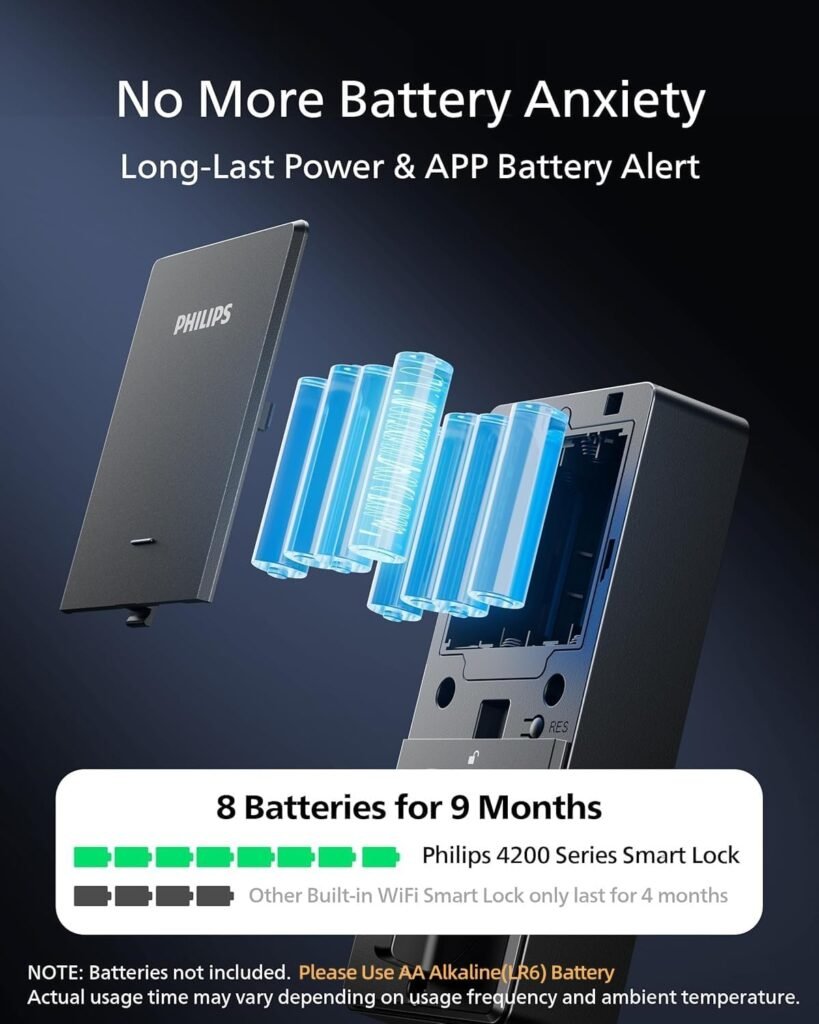
- Power Architecture: Runs via a decoupled 8 AA Alkaline cell array. Drives a reliable 9-Month Lifespan (effectively doubling competitive baselines).
- Ecosystem Support: Direct-to-router cloud networking via the Philips Home Access App ecosystem. Native integration for Amazon Alexa and Google Home commands.
- Security Shielding: Advanced localized hardware-level encryption channels, an autonomous, configurable Auto-Lock tracker, and adaptive scrambler code settings.
The Verdict Pros & Cons:
- ✓ PRO: Built-in Wi-Fi saves setup costs and extra hub purchases.
- ✓ PRO: Blazing fast fingerprint scanner response.
- ✓ PRO: Elite 9-month runtime capacity.
- ✓ PRO: High aesthetic finish and premium feel.
- ✗ CON: Demands a reasonably strong 2.4GHz Wi-Fi node near the door.
- ✗ CON: Larger footprint on the door than simple mechanical locks.
3. Five Advanced Entry Layouts for Maximum Versatility
This security system provides absolute versatility, letting every family member or visitor utilize the unlocking dynamic that best adapts to their immediate lifestyle requirements.
🔐 “The Key is Always With You” — High-Accuracy Biometric Scan
This is the ultimate day-to-day unlock interface. Instead of searching through bags or balancing grocery loads, you simply touch the high-accuracy reader located on the handle junction. The sensor registers, matches, and disengages the bolt mechanism in under 0.3 seconds. Its 50-print database means you can map multiple fingers or authorize recurring access nodes for contractors, cleaners, or extended family.
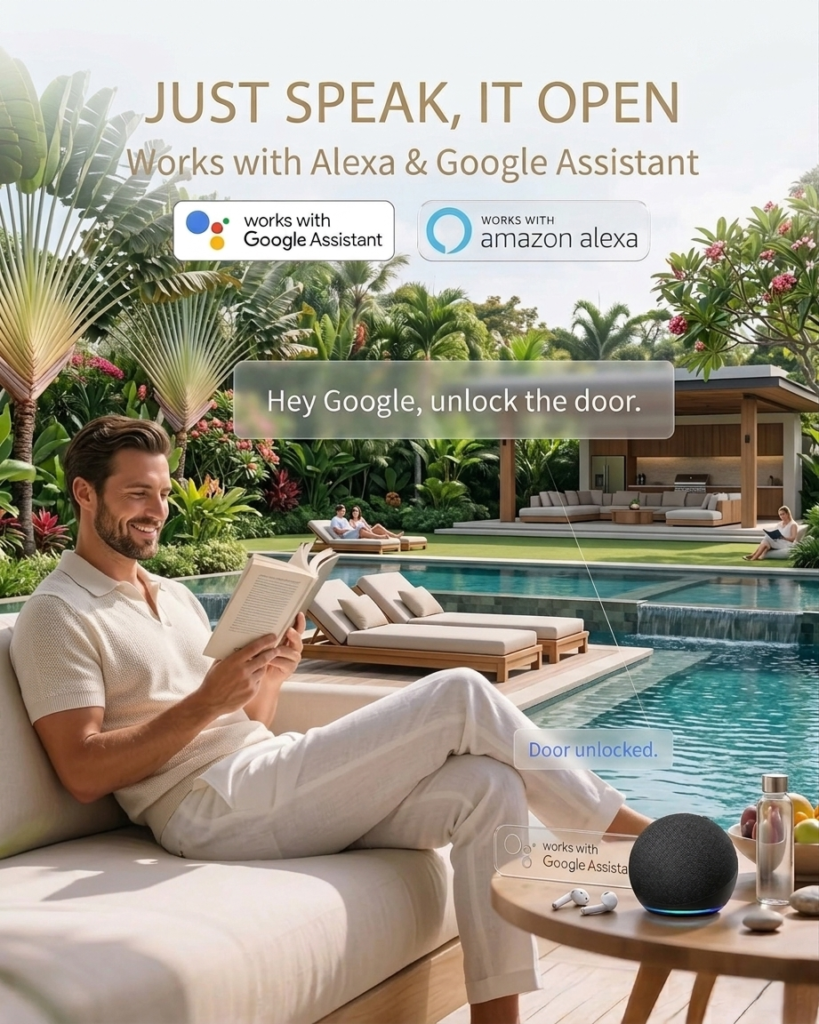
🗣️ “Just Speak, It Opens” — Smart Home Ecosystem Automation
If your hands are completely tied up or you are relaxing in the backyard or upstairs bedroom, the device links perfectly to your home voice network. Fully configured for Amazon Alexa and Google Assistant ecosystems, managing entry requires nothing more than a simple vocal prompt.
4. Advanced Battery Architecture & Low-Energy Optimization
A major objection keeping property owners from trying smart door systems is the constant worry about unexpected power loss. Philips directly counters this design weakness with a low-power mainboard profile coupled with an expansive internal layout.
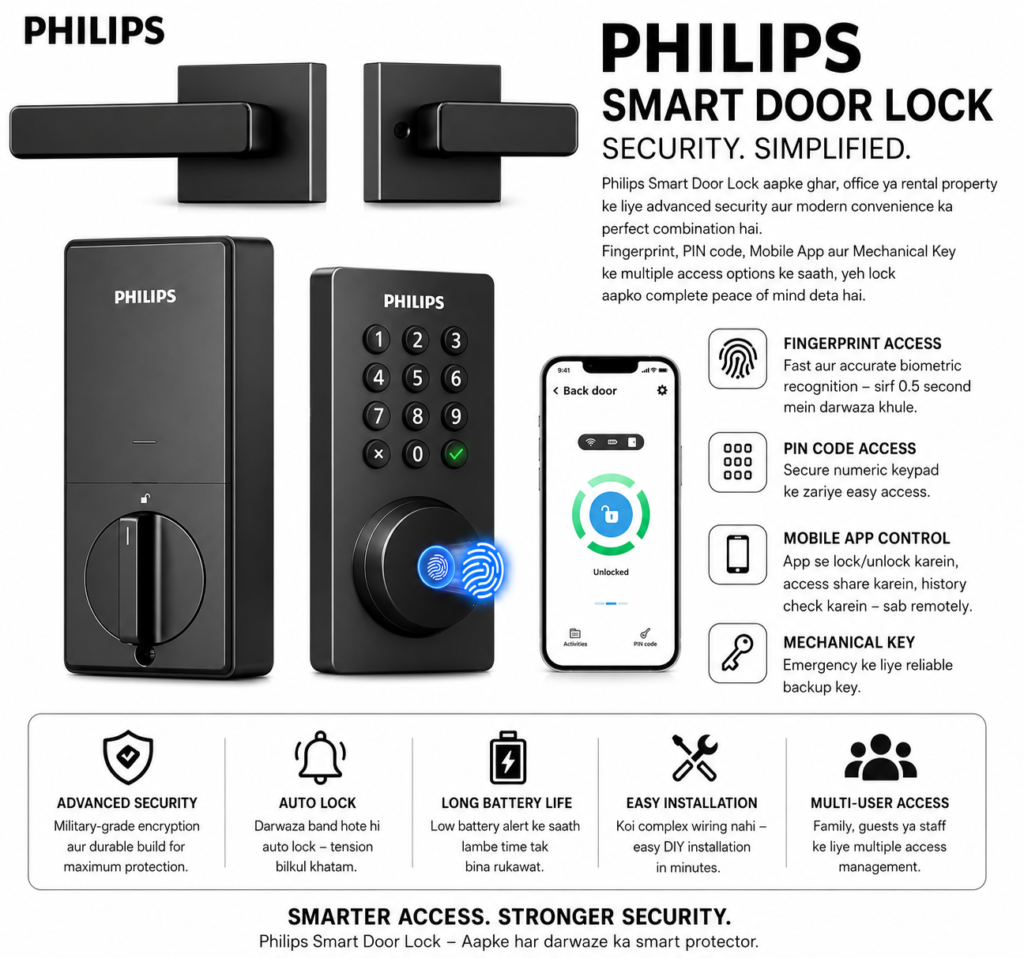
The system utilizes an 8-cell AA Alkaline array to achieve a solid 9-month operational horizon, keeping you protected through changing seasons without hassle. The cloud app keeps constant watch over power performance metrics, pushing direct notification warnings straight to your smartphone weeks before a battery refresh is required.
5. DIY Step-by-Step Hardware Installation Guide
Despite these sophisticated features, the entire system is designed for an accessible DIY home assembly project. There are no complicated network cables or specialized electrical re-routing needs. You can easily manage the transition yourself using only a standard Phillips screwdriver in about 20 minutes:
- Prepare the Door Frame: Remove your current deadbolt and matching handle components completely. Clean the open mounting surfaces thoroughly so the new gaskets rest flush against the wood or steel skin.
- Fit the Latches & Deadbolt Core: Insert the new deadbolt cylinder assembly into the upper bore and the companion door latch inside the bottom path. Ensure the directional “TOP” engraving faces vertically before fixing them down tightly with the wood screws.
- Align the Exterior Keypad Faceplate: Carefully guide the main data ribbon wire underneath the deadbolt path channel inside the door. Push the front numeric keypad faceplate clean against the exterior door skin, confirming the central torque spindle centers squarely through the latch cam.
- Lock Down the Interior Anchor Bracing: From the internal side, slide the structural anchor plate over the data ribbon. Fasten this metal bracket firmly to the outer panel using the provided machine bolts, clamping the lock tightly across the door width.
- Bridge the Internal Control Wire: Plug the data connection block firmly into the receiving terminal port on the back side of the heavy internal main module. Gently tuck away any remaining slack line to avoid crimping, set the main chassis over the anchor plate, and secure it with the mounting screws.
- Initialize Battery Array & App Integration: Install 8 fresh, premium-tier AA Alkaline batteries into the chamber. Download and open the Philips Home Access App on your smartphone, enable your Bluetooth connection, scan the product’s individual QR code setup tag, and link the lock directly to your local 2.4GHz home Wi-Fi channel.
The Bottom Line: Is This Smart Lock Worth It?
Without question. The Philips Wi-Fi Keypad Door Lock with Handle offers a top-tier combination of high-end home security and effortless day-to-day access. Backed by a household brand name trusted globally for product longevity, it completely removes the daily headaches of lost keys, locking yourself out, or worrying whether the door is locked.
To wrap up, our Philips Wi-Fi Keypad Smart Door Lock review shows that this device is highly reliable for modern homes.
🛒 Ready to Upgrade Your Home Security?
(Note: If you found this review helpful, please share it with your friends and family who are looking to upgrade their smart homes!)